
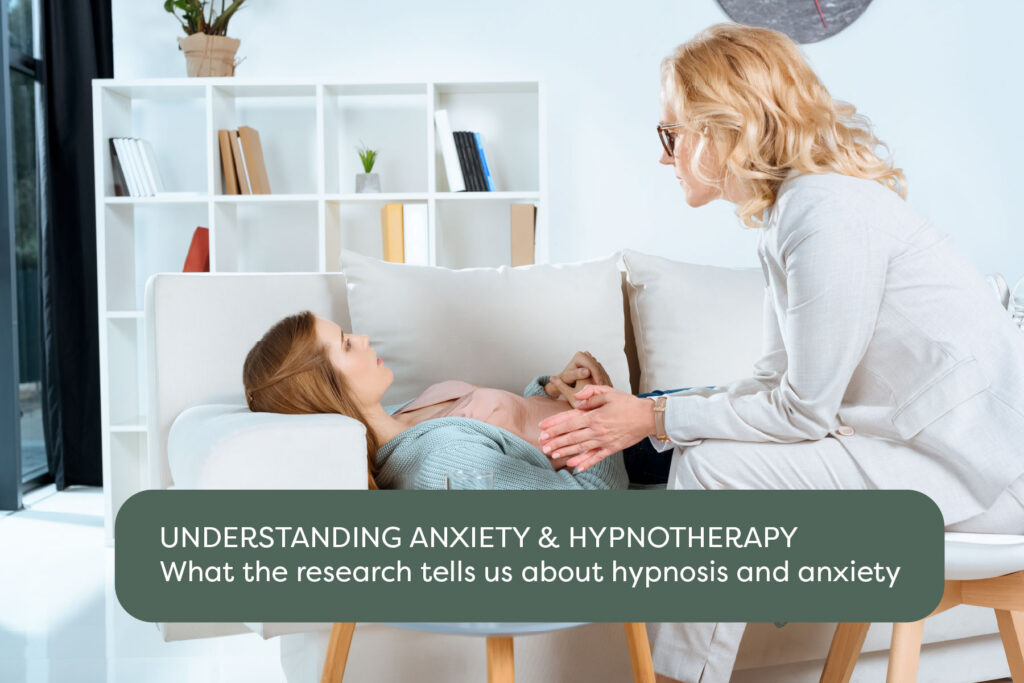
Hypnosis is often portrayed as mysterious, theatrical, or controlling. Those portrayals can make it difficult to understand what clinical hypnotherapy actually involves.
In a therapeutic setting, hypnosis is neither sleep nor mind control. You remain aware, and you do not surrender your judgment or values.
A widely used professional definition describes hypnosis as a state involving focused attention, reduced awareness of peripheral distractions, and an increased capacity to respond to suggestion (Elkins et al., 2015).
In simpler terms, hypnosis helps you focus your attention in a way that supports therapeutic learning.
You already experience absorbed attention
You may have driven a familiar route and realized that you remember very little of the journey. You may become so immersed in a book that you briefly lose awareness of the room. You may imagine a future conversation so vividly that your body begins reacting as though it were happening.
These are not identical to clinical hypnosis, but they demonstrate that attention can narrow and that imagination can produce genuine emotional and physical responses.
Clinical hypnosis uses these natural capacities deliberately and collaboratively.
What happens in a hypnotherapy session?
A responsible hypnotherapy session begins before hypnosis itself.
Your therapist should ask about your goals, relevant history, present symptoms, expectations, and concerns. Misconceptions about hypnosis should be discussed, and you should understand how the work relates to the issue you want to address.
The hypnotic portion of a session may involve focusing on breathing, physical sensations, an image, a sound, or the therapist’s voice. Some people experience deep relaxation, while others remain mentally active. Relaxation can be helpful, but it is not a requirement for hypnosis.
Once attention has become more focused, the therapist introduces suggestions and experiences connected to your goals. These might include:
- imagining yourself responding differently to a trigger
- experiencing a sense of calm, safety, or capability
- viewing an old situation from a more compassionate perspective
- rehearsing sleep, public speaking, boundary-setting, or another desired behaviour
- using metaphor to approach a problem indirectly
- strengthening confidence in your ability to respond to discomfort
Suggestions are not commands. They are invitations that you can accept, modify, or reject.
Does hypnosis work for anxiety?
The evidence is promising, although it should be interpreted carefully.
Valentine and colleagues (2019) conducted a meta-analysis of 15 studies comprising 17 controlled trials of hypnosis for anxiety. At the end of treatment, the average effect size was 0.79. The authors calculated that the average participant receiving hypnosis improved more than approximately 79% of participants in the control conditions.
Seven trials included follow-up assessments. At the longest follow-up, the average effect size was 0.99, corresponding to improvement greater than approximately 84% of control participants.
The researchers also found that hypnosis was more effective when combined with other psychological interventions than when used alone.
These results are encouraging, but they are not proof that hypnosis will work equally well for every person or every form of anxiety. The studies involved different populations, interventions, comparison groups, and types of anxiety. Some aspects of study quality, including allocation methods, were unclear.
A broader umbrella review published in 2024 examined 49 meta-analyses incorporating 261 distinct primary studies across a range of mental and physical health concerns (Rosendahl et al., 2024). The authors found considerable evidence supporting hypnosis, with particularly strong results for pain, medical procedures, and younger populations.
They also identified substantial variation across studies. Only nine of the included meta-analyses were rated as methodologically high quality. The authors called for more direct comparisons between hypnosis and established treatments, better investigation of who benefits, and more consistent reporting of adverse events.
That balanced conclusion is important: hypnosis is supported by a meaningful and growing evidence base, but the research does not justify exaggerated promises.
Why might hypnosis be useful for anxiety?
Anxiety often persists because imagining danger can activate many of the same responses as encountering it.
Hypnosis uses that relationship between imagination and response in a therapeutic direction. Instead of unconsciously rehearsing catastrophe, you can intentionally rehearse steadiness, coping, resolution, or recovery.
This is more than repeating a positive affirmation. Effective suggestions need to be believable, relevant, and connected to your experience.
For someone who fears public speaking, the goal may not be to suggest, “I will never feel nervous.” A more useful experience might involve noticing some activation, recognizing it as energy, finding a steady breath, connecting with the audience, and continuing to speak.
For someone who lies awake worrying, hypnosis might not demand that the mind become blank. It may help the person set down responsibility for the night, experience thoughts as less urgent, and reconnect the bed with rest rather than mental work.
Hypnotherapy is collaborative
The quality of the therapeutic relationship matters. You should feel respected, informed, and free to ask questions. Treatment should be adapted to you rather than delivered as though everyone’s anxiety has the same origin.
Hypnotherapy can also be integrated with other approaches. Depending on a person’s needs, treatment may include education, cognitive strategies, gradual exposure, mindfulness, breathwork, behavioural change, or consultation with other healthcare professionals.
Hypnosis is best understood as a therapeutic method—not an ideology that must replace everything else.
What change can look like
Change may be dramatic for some people, but it is often quieter.
You notice that you recover more quickly after a stressful event. You sleep through a night that would once have been consumed by worry. You state a boundary without spending three days rehearsing it. You feel anxiety arise and realize that it no longer determines what happens next.
I work with clients over a series of sessions rather than as a one-time intervention. This allows us to understand the pattern, create individualized hypnotic experiences, and reinforce changes as they begin appearing in everyday life.
Book a free 20-minute discovery call to explore whether hypnotherapy may be appropriate for you.
In the final article in this series, I look at the stories we carry about ourselves—and how imagery, metaphor, and hypnotic experience may help those stories evolve.
References
Elkins, G. R., Barabasz, A. F., Council, J. R., & Spiegel, D. (2015). Advancing research and practice: The revised APA Division 30 definition of hypnosis. International Journal of Clinical and Experimental Hypnosis, 63(1), 1–9. https://doi.org/10.1080/00207144.2014.961870
Rosendahl, J., Alldredge, C. T., & Haddenhorst, A. (2024). Meta-analytic evidence on the efficacy of hypnosis for mental and somatic health issues: A 20-year perspective. Frontiers in Psychology, 14, Article 1330238. https://doi.org/10.3389/fpsyg.2023.1330238
Valentine, K. E., Milling, L. S., Clark, L. J., & Moriarty, C. L. (2019). The efficacy of hypnosis as a treatment for anxiety: A meta-analysis. International Journal of Clinical and Experimental Hypnosis, 67(3), 336–363. https://doi.org/10.1080/00207144.2019.1613863
This article is intended for education and is not a substitute for individualized medical or mental-health care.